

Longleng
General information
-
Ideal Duration:
Duration: 1 to 2 DaysPlace Type:
Category: Offbeat, Tribal Culture, and NatureEntry Fees:
Village Entry: Most villages do not charge an entry fee, but it is customary and respectful to meet the village headman (Angh) before exploring.
Handicraft Centers: Visiting local workshops is free, though purchasing a handmade item is the b...Village Entry: Most villages do not charge an entry fee, but it is customary and respectful to meet the village headman (Angh) before exploring.
Handicraft Centers: Visiting local workshops is free, though purchasing a handmade item is the best way to support the local economy and artisans.Timing:
General Timing: Most shops and markets open at 7:00 AM and close by 4:00 PM as the town settles down early in the evening.
Ideal Visiting Hours: Early mornings between 6:00 AM and 9:00 AM are the best times to experience the famous cloud cov...General Timing: Most shops and markets open at 7:00 AM and close by 4:00 PM as the town settles down early in the evening.
Ideal Visiting Hours: Early mornings between 6:00 AM and 9:00 AM are the best times to experience the famous cloud covers and misty landscapes.Special Events:
Monyu Festival: Celebrated in the first week of April, this is the most important festival for the Phom tribe, marking the end of the winter and the coming of spring.
Traditional Feasts: During community events, large feasts featuring local ...Monyu Festival: Celebrated in the first week of April, this is the most important festival for the Phom tribe, marking the end of the winter and the coming of spring.
Traditional Feasts: During community events, large feasts featuring local delicacies like smoked pork and bamboo shoots are prepared and shared by all.Best Photo Spots:
Hilltop Viewpoints: Any high point in Longleng Town offers a chance to photograph the rolling clouds that often fill the valleys below.
Village Life: The traditional bamboo houses and elders in ethnic attire in Bhumnyu provide soulful subjec...Hilltop Viewpoints: Any high point in Longleng Town offers a chance to photograph the rolling clouds that often fill the valleys below.
Village Life: The traditional bamboo houses and elders in ethnic attire in Bhumnyu provide soulful subjects for cultural and portrait photography.
River Valleys: The deep valleys of the Dikhu River during the golden hour offer stunning light and shadow play for professional landscape shots.Photo Gallery
Things To Do
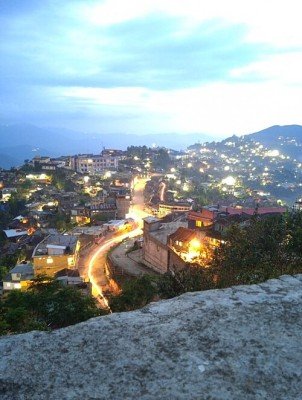 @@Place Details: Alayong Village is a serene destination that serves as a living museum of the Phom Naga lifestyle. It is nestled amidst the rolling hills of Nagaland and offers a panoramic view of the misty valleys. The village is known for its quietude and the traditional lifestyle that has remained unchanged for decades. Visitors can witness the daily routines of the villagers, from traditional weaving to the cultivation of local crops on terraced fields. The lush greenery surrounding the village makes it a paradise for nature lovers and those seeking a break from urban chaos. Exploring the narrow paths of Alayong Village reveals the deep connection between the local community and the environment. The hospitality of the people here is legendary, as they often welcome guests with local tea and stories of their ancestors. This place is not just a geographical location but a cultural experience that enriches the soul of every traveler.
 @@The Phom Naga Handicrafts Market is the commercial soul of Longleng, where the district's title as the "District of Handicrafts" truly comes to life. Every morning, artisans from nearby villages like Hukphang and Bhumnyu arrive with their latest creations. The market is a sensory explosion of earthy smells from freshly cut bamboo and the vibrant sight of dyed wool. Here, you can find the famous Phom bamboo baskets, known for their incredible durability and intricate weave patterns that vary based on their use—be it for carrying firewood or storing grain. The market is also the best place to buy authentic Phom shawls and waistcoats, which are hand-woven on loin looms by local women. Unlike commercial stores, here you can often meet the person who actually made the item, allowing for a deeper connection and a fair price. You will also find wood-carved items like traditional tobacco pipes and wall hangings depicting Naga warriors. The market plays a vital role in the local economy, providing a sustainable livelihood for hundreds of families. It is not just a place for shopping; it is a social hub where news is exchanged over cups of local tea. For tourists, it is an ethical shopping destination where every purchase helps in the preservation of ancient Naga crafts.
 @@The Phom Community Hall stands as the central pillar of social and civic life in Longleng. It is a massive multi-purpose structure that hosts every major cultural gathering, governmental meeting, and tribal council decision for the Phom Naga tribe. This hall represents the unity and collective strength of the local people. Inside, the walls are often decorated with traditional motifs and photographs that tell the story of the tribe's transition from ancient warriors to a modern peaceful community. It serves as a bridge between the old and the new, where elders discuss customary laws while the youth organize modern educational programs. During major festivals like Monyiu, this hall becomes a beehive of activity, filled with the sounds of traditional folk songs and the vibrant colors of ethnic costumes. For a visitor, it is the best place to observe the "living culture" of the Phom people. You can witness the intricate social hierarchy and the respect given to village elders here. The hall is not just a building but a symbol of the Phom identity, standing proud in the heart of the district headquarters. It is often the first point of contact for researchers and travelers who want to understand the community structure before heading into the remote villages.
 @@The Phom Cultural Museum is the definitive repository of the material culture and historical artifacts of the Phom tribe. Established to preserve the fast-fading traditions of the region, the museum houses an impressive collection of ancient weaponry, including spears and "Daos" (traditional machetes) used during the era of headhunting. One of the highlights is the display of traditional attire; the Phom tribe is renowned for its specific shawl patterns like the Nempong-Ashak (dark blue) and Vihe-Ashak (white), which indicate the social status of the wearer. The museum also showcases unique musical instruments like the log drum models and bamboo flutes. Anthropologists find this place invaluable because it documents the transition of the Phom people from their ancestral beliefs to Christianity. Detailed exhibits explain the "Morung" system, where young boys were once trained in the art of war and life. The museum also contains rare pottery pieces and jewelry made of carnelian beads and brass. For a visitor, walking through the galleries is like traveling back in time to an era of misty mountains and fierce warriors. The curators are often local experts who can provide deep insights into the meaning of the carvings and the significance of the various animal motifs used in their art.
 Yingli College is the premier higher educational institution in the Longleng district, established in 1992 by the Association of Phom Graduates and Officers. It serves as a vital center for academic excellence for the youth of the Phom tribe and neighboring areas. The college is beautifully situated on a sprawling 52-acre campus donated by the Bhumnyu Village Council, offering a panoramic view of the rolling hills and deep valleys of Northern Nagaland. The institution is known for its "Longongkang Campus," which translates to a place of enlightenment in the local dialect. It is more than just a place of learning; it is a cultural hub where traditional Naga values are integrated into modern education. The campus is exceptionally green, featuring horticulture farms, herbal gardens, and well-maintained sports fields. For a visitor, the college provides an insight into the intellectual aspirations of the Naga youth and the efforts being made toward social and environmental awareness. The college has been recognized with a 'B+' grade by NAAC, reflecting its commitment to quality education despite being in one of the most remote parts of India. The atmosphere here is academic yet deeply connected to the tribal roots, with students often seen in a mix of modern and traditional attire. The college also hosts various vocational centers like IGNOU and NIELIT, making it a comprehensive developmental center for the entire district. A visit to the campus during a college festival or a seminar provides a unique perspective on the vibrant and energetic future of the Longleng community.
@@Tamlu Town is the second most important urban center in the Longleng district, serving as the gateway to the northern reaches of the Phom territory. Historically, Tamlu was a major point of contact during the British era and has a unique colonial-tribal history. The town is situated at a slightly lower altitude compared to Longleng, which gives it a distinct climate and vegetation. It is surrounded by lush forests and is known for its proximity to the Dikhu River, which provides excellent spots for fishing and picnicking. The community in Tamlu is a mix of Phom and neighboring tribes, making it a cultural melting pot. The town is famous for its organic orange and ginger production, and during the harvest season, the local markets are flooded with fresh produce. For tourists, Tamlu serves as a base for trekking expeditions into the deeper jungles of Northern Nagaland. The hospitality here is legendary, with several homestays offering a taste of local Naga life. The town also has several historical sites, including old British-era rest houses and tribal boundary markers. Tamlu is the perfect destination for those who want to experience the rugged beauty of Nagaland while having access to basic town amenities.
The Longleng Town Scenic Viewpoint is perhaps the most iconic landmark for photography enthusiasts and nature lovers visiting the district. Perched at an elevation of over 1,000 meters, this spot offers an unparalleled 360-degree view of the surrounding mountain ranges and the winding Dikhu river valley. On a clear day, visitors can see the distant peaks of the Naga hills stretching towards the Myanmar border. The viewpoint is famous for its "cloud carpet" phenomenon, where the valley below gets completely filled with thick, white clouds, making the town look like an island in the sky. It is a quiet, contemplative place where one can truly appreciate the rugged beauty of northern Nagaland. The path leading to the viewpoint is lined with wildflowers and traditional stone markers. Many tourists visit this spot during the early morning hours to catch the sunrise, which bathes the entire landscape in a golden hue. The viewpoint also serves as a vantage point for observing the traditional terraced cultivation practiced by the Phom villagers on the nearby slopes. It is a must-visit for anyone looking to understand why Longleng is celebrated as a "Land of Clouds." The sheer scale of the landscape visible from here is a humbling experience that stays with travelers long after they leave.Show All
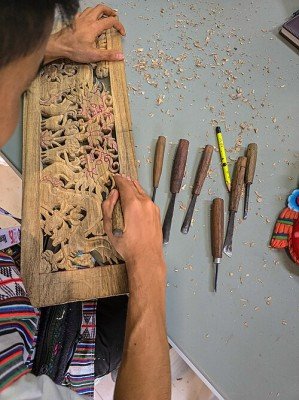
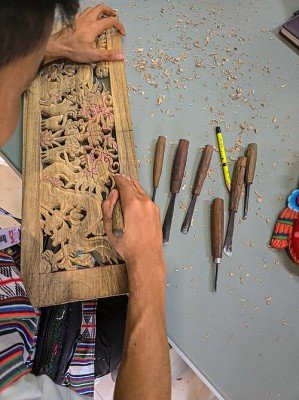
The Longleng Handicraft Training Centre is the cultural soul of the district, preserving the ancient skills of the Phom Naga people. Known as the "District of Handicrafts," Longleng prides itself on its unique pottery, bamboo weaving, and textile production. This center serves as a school for young artisans to learn the intricate patterns of the Phom shawls, such as the Vihe-ashak. Visitors can witness the live process of wood carving, where master craftsmen transform timber into traditional mugs and decorative panels. The center is also famous for its pottery, which is uniquely done without a potter's wheel, relying entirely on hand-molding techniques. This place is a must-visit for anyone interested in sustainable art and indigenous culture. Every item produced here tells a story of the tribe’s history, from their days as fierce headhunters to their modern Christian identity. The smell of fresh bamboo and the rhythmic sound of looms create a peaceful atmosphere. Tourists can purchase authentic souvenirs directly from the makers, ensuring the money goes back to the local community. It is a vibrant hub that keeps the tribal identity alive in a rapidly changing world.
Yingli College is the premier higher educational institution in the Longleng district, established in 1992 by the Association of Phom Graduates and Officers. It serves as a vital center for academic excellence for the youth of the Phom tribe and neighboring areas. The college is beautifully situated on a sprawling 52-acre campus donated by the Bhumnyu Village Council, offering a panoramic view of the rolling hills and deep valleys of Northern Nagaland. The institution is known for its "Longongkang Campus," which translates to a place of enlightenment in the local dialect. It is more than just a place of learning; it is a cultural hub where traditional Naga values are integrated into modern education. The campus is exceptionally green, featuring horticulture farms, herbal gardens, and well-maintained sports fields. For a visitor, the college provides an insight into the intellectual aspirations of the Naga youth and the efforts being made toward social and environmental awareness. The college has been recognized with a 'B+' grade by NAAC, reflecting its commitment to quality education despite being in one of the most remote parts of India. The atmosphere here is academic yet deeply connected to the tribal roots, with students often seen in a mix of modern and traditional attire. The college also hosts various vocational centers like IGNOU and NIELIT, making it a comprehensive developmental center for the entire district. A visit to the campus during a college festival or a seminar provides a unique perspective on the vibrant and energetic future of the Longleng community.
@@Tamlu Town is the second most important urban center in the Longleng district, serving as the gateway to the northern reaches of the Phom territory. Historically, Tamlu was a major point of contact during the British era and has a unique colonial-tribal history. The town is situated at a slightly lower altitude compared to Longleng, which gives it a distinct climate and vegetation. It is surrounded by lush forests and is known for its proximity to the Dikhu River, which provides excellent spots for fishing and picnicking. The community in Tamlu is a mix of Phom and neighboring tribes, making it a cultural melting pot. The town is famous for its organic orange and ginger production, and during the harvest season, the local markets are flooded with fresh produce. For tourists, Tamlu serves as a base for trekking expeditions into the deeper jungles of Northern Nagaland. The hospitality here is legendary, with several homestays offering a taste of local Naga life. The town also has several historical sites, including old British-era rest houses and tribal boundary markers. Tamlu is the perfect destination for those who want to experience the rugged beauty of Nagaland while having access to basic town amenities.
The Longleng Town Scenic Viewpoint is perhaps the most iconic landmark for photography enthusiasts and nature lovers visiting the district. Perched at an elevation of over 1,000 meters, this spot offers an unparalleled 360-degree view of the surrounding mountain ranges and the winding Dikhu river valley. On a clear day, visitors can see the distant peaks of the Naga hills stretching towards the Myanmar border. The viewpoint is famous for its "cloud carpet" phenomenon, where the valley below gets completely filled with thick, white clouds, making the town look like an island in the sky. It is a quiet, contemplative place where one can truly appreciate the rugged beauty of northern Nagaland. The path leading to the viewpoint is lined with wildflowers and traditional stone markers. Many tourists visit this spot during the early morning hours to catch the sunrise, which bathes the entire landscape in a golden hue. The viewpoint also serves as a vantage point for observing the traditional terraced cultivation practiced by the Phom villagers on the nearby slopes. It is a must-visit for anyone looking to understand why Longleng is celebrated as a "Land of Clouds." The sheer scale of the landscape visible from here is a humbling experience that stays with travelers long after they leave.Show All
The Longleng Handicraft Training Centre is the cultural soul of the district, preserving the ancient skills of the Phom Naga people. Known as the "District of Handicrafts," Longleng prides itself on its unique pottery, bamboo weaving, and textile production. This center serves as a school for young artisans to learn the intricate patterns of the Phom shawls, such as the Vihe-ashak. Visitors can witness the live process of wood carving, where master craftsmen transform timber into traditional mugs and decorative panels. The center is also famous for its pottery, which is uniquely done without a potter's wheel, relying entirely on hand-molding techniques. This place is a must-visit for anyone interested in sustainable art and indigenous culture. Every item produced here tells a story of the tribe’s history, from their days as fierce headhunters to their modern Christian identity. The smell of fresh bamboo and the rhythmic sound of looms create a peaceful atmosphere. Tourists can purchase authentic souvenirs directly from the makers, ensuring the money goes back to the local community. It is a vibrant hub that keeps the tribal identity alive in a rapidly changing world.Information
-
Why Famous:
Phom Culture: It is the center of the Phom Naga tribe, famous for their unique festivals like Monyu and their mastery over bamboo and wood crafts.
Cloud Landscapes: The district's high elevation creates stunning "sea of clouds" effects in th...Phom Culture: It is the center of the Phom Naga tribe, famous for their unique festivals like Monyu and their mastery over bamboo and wood crafts.
Cloud Landscapes: The district's high elevation creates stunning "sea of clouds" effects in the valleys, a major draw for landscape photographers and dreamers.
Handicraft Excellence: The local artisans produce some of the finest traditional Naga shawls and bamboo items in the entire state of Nagaland.
River Tourism: The confluence of local rivers provides excellent spots for traditional fishing and picnicking in a completely serene and natural environment. -
Architecture:
Traditional Long Houses: The architecture in Longleng villages often features long, communal houses built with bamboo, wood, and thatched roofs made of local palm leaves.
Morung Structures: Tribal Morungs are significant architectural landma...Traditional Long Houses: The architecture in Longleng villages often features long, communal houses built with bamboo, wood, and thatched roofs made of local palm leaves.
Morung Structures: Tribal Morungs are significant architectural landmarks, serving as educational centers for youth and featuring large log drums and intricate wood carvings.
Town Layout: Longleng Town is built along the ridges of hills, with houses stepping down the slopes, connected by narrow winding paths and stone staircases.
Community Halls: Modern structures in the town often incorporate Phom cultural motifs in their facades, blending concrete construction with traditional Naga design elements. -
How To Reach:
By Air: The nearest major airport is Dibrugarh in Assam, about 135 KM away; from there, one must hire a private taxi to reach Longleng.
By Train: Mariani or Amguri in Assam are the closest railway stations, providing a gateway for travelers...By Air: The nearest major airport is Dibrugarh in Assam, about 135 KM away; from there, one must hire a private taxi to reach Longleng.
By Train: Mariani or Amguri in Assam are the closest railway stations, providing a gateway for travelers coming from Guwahati or Dimapur.
By Road: Longleng is connected to Mokokchung and Tuensang by mountain roads; state buses and shared jeeps are the primary means of reaching the district.
By Local Transport: Shared sumos and taxis are available for travel between the town and surrounding villages, though many areas are best explored on foot. -
Weather and Best Time to Visit:
Spring Season: March to May is excellent as the weather is pleasant and the Monyu festival brings a lot of life and color to the region.
Winter Season: November to February is the best time for clear views and trekking, although it can get q...Spring Season: March to May is excellent as the weather is pleasant and the Monyu festival brings a lot of life and color to the region.
Winter Season: November to February is the best time for clear views and trekking, although it can get quite cold during the nights and early mornings.
Monsoon Season: June to September should be avoided due to heavy rains that can cause road blocks and make traveling through the hills difficult. -
Near Tourist Places:
1. Mokokchung (85 KM), 2. Tuensang (100 KM), 3. Mon (120 KM), 4. Bhumnyu Village (5 KM), 5. Pongo Village (8 KM), 6. Dikhu River (15 KM), 7. Amguri (90 KM), 8. Sibsagar (110 KM), 9. Jorhat (130 KM), 10. Dimapur (220 KM).
Tourism Tips
-
Health and Safety: Carry a basic first-aid kit and insect repellent; the region is remote, so medical facilities are basic and limited to the main town.
Packing Essentials: Sturdy walking shoes are a must for the hilly paths, and layered cl...Health and Safety: Carry a basic first-aid kit and insect repellent; the region is remote, so medical facilities are basic and limited to the main town.
Packing Essentials: Sturdy walking shoes are a must for the hilly paths, and layered clothing is recommended to deal with the frequent changes in temperature.
Respecting Customs: Always ask for permission before taking photos of people, and respect the local traditions and community rules when visiting tribal villages.
Connectivity: Mobile signals can be erratic in remote villages; it is better to inform your family about your itinerary in advance and carry offline maps.
Reviews
FAQs
Longleng Itineray And Cost:-
Other Places In Nagaland :-
Other States In India :-
Information about New and Updated Locations() of Nagaland Has Been Added :-
Card subtitle
Note:-
Information provided here in good Faith and for reference only.
Near Places
Dimapur
Some quick example text to build on the card title and make up the bulk of the card's content.
Go somewhere
Dzulekie
Some quick example text to build on the card title and make up the bulk of the card's content.
Go somewhere
Khonoma
Some quick example text to build on the card title and make up the bulk of the card's content.
Go somewhere
Kigwema
Some quick example text to build on the card title and make up the bulk of the card's content.
Go somewhere
Kiphire
Some quick example text to build on the card title and make up the bulk of the card's content.
Go somewhere
Kohima
Some quick example text to build on the card title and make up the bulk of the card's content.
Go somewhere
Longleng
Some quick example text to build on the card title and make up the bulk of the card's content.
Go somewhere
Meluri
Some quick example text to build on the card title and make up the bulk of the card's content.
Go somewhere
Mokokchung
Some quick example text to build on the card title and make up the bulk of the card's content.
Go somewhere
Mon
Some quick example text to build on the card title and make up the bulk of the card's content.
Go somewhere
Mopungchuket
Some quick example text to build on the card title and make up the bulk of the card's content.
Go somewhere
Nagaland Heritage Village
Some quick example text to build on the card title and make up the bulk of the card's content.
Go somewhere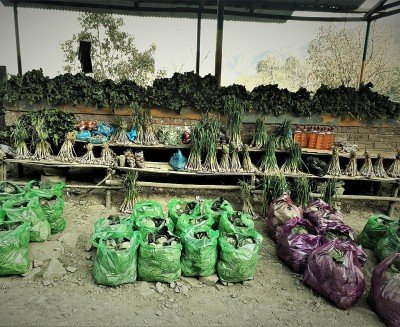
Niuland
Some quick example text to build on the card title and make up the bulk of the card's content.
Go somewhere
Noklak
Some quick example text to build on the card title and make up the bulk of the card's content.
Go somewhere
Peren
Some quick example text to build on the card title and make up the bulk of the card's content.
Go somewhere
Zunheboto
Some quick example text to build on the card title and make up the bulk of the card's content.
Go somewherein Other Cities