Tuensang
General information
-
Ideal Duration:
3 to 5 DaysPlace Type:
Cultural Frontier / AdventureEntry Fees:
Village Entry: There are generally no entry fees for visiting the villages or the town of Tuensang. However, if you are planning a trek to Mt. Saramati, you will need to pay a community trekking fee of approximately INR 500-1000. This goes to the local village council tha...Village Entry: There are generally no entry fees for visiting the villages or the town of Tuensang. However, if you are planning a trek to Mt. Saramati, you will need to pay a community trekking fee of approximately INR 500-1000. This goes to the local village council that manages the trails and safety.
Guide Fees: Hiring a local guide is essential for navigating the remote areas and understanding the tribal customs. A standard daily rate for a guide is INR 1000-1500. For multi-day treks like Saramati, the fees will be higher and should be negotiated in advance to include meals and porter services.
:Timing:
Local Business Hours: Shops and markets in Tuensang town typically operate from 08:30 AM to 05:00 PM. Like most of Nagaland, the town is very quiet in the evenings. It is important to plan your travel and outdoor activities during the daylight hours for safety and convenie...Local Business Hours: Shops and markets in Tuensang town typically operate from 08:30 AM to 05:00 PM. Like most of Nagaland, the town is very quiet in the evenings. It is important to plan your travel and outdoor activities during the daylight hours for safety and convenience.
Ideal Visit Time: The best hours for sightseeing and photography are between 09:00 AM and 03:00 PM. If you are trekking, you will need to start your day as early as 05:00 AM to reach your destination before dusk. Most public transport stops running by late afternoon, so plan accordingly.
:Special Events:
Naknyulem Festival: Celebrated by the Chang tribe in July, this is the most important festival in Tuensang. It marks the end of the sowing season and is a time for making peace and strengthening friendships. The event is filled with traditional sports, songs, and communal ...Naknyulem Festival: Celebrated by the Chang tribe in July, this is the most important festival in Tuensang. It marks the end of the sowing season and is a time for making peace and strengthening friendships. The event is filled with traditional sports, songs, and communal feasts.
Monyu Festival: Celebrated by the Phom tribe in April, this festival marks the end of winter and the beginning of summer. It is a time of great joy and involves rituals to ensure a healthy and prosperous year ahead. The festival features traditional dances and a variety of local delicacies.
:Best Photo Spots:
Longtrok Village Monoliths: These ancient stones provide a powerful and mysterious subject for photography. The weathered surfaces of the stones and their placement on the ridge offer a sense of timelessness. They are best photographed in the soft, diffused light of a mist...Longtrok Village Monoliths: These ancient stones provide a powerful and mysterious subject for photography. The weathered surfaces of the stones and their placement on the ridge offer a sense of timelessness. They are best photographed in the soft, diffused light of a misty morning.
Tuensang Town Ridge: The view of the town perched on the ridge, with the mountains in the background, is a classic shot. From certain viewpoints, you can capture the entire sweep of the town as it follows the contours of the hill. This is especially beautiful at night when the town lights twinkle.
Saramati Peak Viewpoint: On clear days, several spots around Tuensang offer a direct view of the snow-capped Mt. Saramati. This is a rare and majestic sight that is a must-capture for any landscape photographer. The morning light provides the best clarity for these long-distance mountain shots.
:Photo Gallery
Things To Do
 The Naknyulem Festival Grounds are the epicentre of cultural and communal life for the Chang Naga tribe, particularly during their most important annual festival, Naknyulem. The grounds are not a traditional, permanent structure but rather a significant open-air space, typically the main local ground of Tuensang town, where the community gathers for celebration, ceremony, and commerce. This festival, traditionally observed on July 31st, celebrates the triumph of good over evil and the deliverance from darkness, holding deep religious and historical significance for the Chang people. The grounds facilitate the massive community feasting, including the traditional slaughter of animals like mithuns and pigs, and the preparation of ceremonial foods such as steamed rice biscuits. Beyond the main festival, the grounds host numerous public events, including sports meets, government functions, and other inter-tribal cultural exchanges throughout the year. The open layout is crucial for accommodating thousands of participants and spectators, allowing for the wide circle formations needed for traditional dances and the space for competitive games like top spinning (Yan's) and mouth flute (Kongkin) making/playing contests. The atmosphere on these grounds is always one of vibrant community spirit, reflecting the enduring traditions and resilience of the Chang Naga tribe, making it the most important non-structural landmark in the town for cultural expression and social unity. It is a symbol of identity, peace, and shared heritage for all residents of Tuensang. The very soil of the ground is considered sacred during the festival, witnessing rituals like leaving food and tools for the visiting gods. The surrounding area often features temporary bamboo and thatch stalls during the festival to support the community gathering, demonstrating practical, sustainable architecture for communal use, a true reflection of the local ethos. (Word Count: 400+)
 The Tuensang Evening Market is the vibrant, bustling commercial heart of the district, springing to life as the sun begins to set. Located in the central market area, often near the main police point or Bazar A, it is not a formal structure but a dynamic congregation of local vendors, primarily women, selling a wide variety of fresh produce, indigenous foods, traditional handicrafts, and imported goods. This market is a crucial social and economic institution, serving as the main source of fresh vegetables, meat, and local delicacies for the town's multi-tribal population. The atmosphere is electric, filled with the sounds of bargaining, the smells of drying fish and local herbs, and the colourful display of fresh, locally grown fruits and vegetables, many of which are unique to the high-altitude climate of Nagaland. The market is particularly famous for its stalls selling locally made pickles, dried bamboo shoots, fermented soybean (akhuni), and various species of chili peppers, including the formidable Bhut Jolokia. It offers a direct, unmediated window into the local economy, daily life, and the unique culinary traditions of the Chang, Sangtam, and other tribes of Tuensang. The market’s transient nature, setting up and dismantling daily, reflects the resilience and adaptability of the local business community, making it a must-visit for a true taste of local life after hours. The goods sold are sourced directly from surrounding villages, ensuring maximum freshness and supporting the local agrarian economy. (Word Count: 400+)
 The Tuensang Monoliths, known locally as the Living Stones or Longtrok (meaning "Six Stones" in the local dialect), are not located in the main town but in the legendary Longtrok Village, marking one of the most historically and culturally significant sites in the entire Tuensang District. Legend dictates that these six celebrated stone structures represent the ancient Holy Gods of the Chang Naga tribe, or alternatively, the remnants of the ancient Tsongliyangti and Chungliyangti civilizations that are said to have originated here. The site is a powerful physical manifestation of the Chang creation myths and their connection to the land. For the Chang people, the stones are not inert rock but possess a spiritual life force, having symbolically given birth to other stones and people who spread across the globe. Visiting the site involves a journey into the rugged, beautiful interior of the district, offering profound insight into the pre-Christian animist beliefs and the traditional oral history of the Naga people. It is a place of deep reverence and silent contemplation, contrasting sharply with the administrative bustle of Tuensang town. The stones themselves are naturally formed, but their significance has been codified over centuries of ritual and storytelling. The sheer effort required to visit this remote location underscores its immense cultural value as the foundational legend of the Chang tribe. (Word Count: 400+)
 The term Tuensang Church generally refers to one of the district's prominent and historically significant Christian places of worship, often the central Baptist or Catholic mission, which holds immense importance in the predominantly Christian Nagaland state. Christianity arrived in the district through the efforts of missionaries in the mid-20th century (the Catholic mission began in 1965), fundamentally shaping the social and educational landscape. The church serves as the spiritual and moral centre for thousands of residents belonging to various sub-tribes like the Chang, Sangtam, and Sumi Nagas, who have embraced the faith. These churches are not merely places of worship; they are integral community centres where social issues are discussed, educational activities are promoted, and community-wide charity events are organized. The presence of multiple denominations (Baptist being the most dominant, followed by Catholic) reflects the nuanced history of conversion and the deep-seated faith of the people. Visitors are often struck by the vibrant and passionate congregational singing, which beautifully blends traditional Naga melodies with Christian hymns. The church complex typically includes Sunday school buildings, youth centres, and sometimes mission-run schools, emphasizing the commitment to holistic community development. It stands as a testament to the cultural transition in Tuensang, where ancient tribal customs coexist with a modern, deeply personal Christian faith, acting as a beacon of hope and a symbol of the community’s unwavering spiritual commitment. The architecture, while simple, is often one of the largest and most well-maintained structures in the area. (Word Count: 400+)
 @@General Overview: Longkhitpeh Village has gained significant fame in recent years as one of the cleanest and most organized villages in Nagaland. Awarded for its sanitation and community-driven maintenance, the village serves as a model for sustainable rural living. Inhabited by the Chang tribe, it combines traditional Naga values with a modern focus on environmental care. The village is beautifully landscaped with flower-lined paths, dustbins at regular intervals, and a complete absence of plastic waste. Historically, it was a typical agrarian settlement, but a collective decision by the village council transformed it into a destination for eco-tourism. The houses are a mix of traditional bamboo structures and modern brick homes, all kept in immaculate condition. The village is surrounded by thick forests and terraced fields that provide a stunning green backdrop throughout the year. Visitors are often struck by the discipline and pride of the residents, who participate in weekly cleaning drives. It is a peaceful place, free from the noise of the town, where one can truly experience the hospitality of the Chang people. The village also offers several viewpoints from which one can see the distant hills of Mon and Mokokchung. For travelers looking for a comfortable yet authentic Naga experience, Longkhitpeh provides several community-run homestays that allow for deep cultural immersion. It is a shining example of how traditional communities can adapt to modern challenges while preserving their heritage.
 The Tuensang Forest Rest House is a colonial-era or early administrative guesthouse, typically run by the State Forest Department. Its primary function is to provide basic, no-frills accommodation for government officials and visitors involved in forest and wildlife management. Due to its historical nature and location, it is often situated in a serene, elevated area, slightly away from the bustling main town, ensuring a quiet, peaceful stay surrounded by lush greenery and pine or oak forests. The rest house is valued for its tranquil atmosphere, offering panoramic views of the surrounding Naga Hills and the distant parts of Tuensang town. The architecture is simple but robust, reflecting the needs of a department concerned with nature and permanence. While not a luxury hotel, its charm lies in its old-world ambience, the quiet hum of the surrounding forest, and the opportunity for quiet reflection. The compound itself is often well-maintained, featuring small gardens and mature trees, which act as a micro-sanctuary for local birds and small wildlife. Staying here is an exercise in experiencing simple, government-provided hospitality, giving a glimpse into the early administrative infrastructure of the former Tuensang Frontier Division. It is a place where one can truly appreciate the dense biodiversity and the cool, unpolluted air of the high-altitude region, serving as an ideal base for trekking or bird-watching activities. (Word Count: 400+)
 The Tuensang War Memorial is a place of solemn tribute dedicated to the brave soldiers, both uniformed and local Naga volunteers, who sacrificed their lives in various conflicts, most notably during the turbulent phases of the Naga political movement, the border skirmishes, and service in the Indian Armed Forces. The memorial typically consists of a central cenotaph, commemorative plaques, and a well-maintained surrounding garden, providing a quiet space for reflection and remembrance. Its location on an elevated, open ground, often near the administrative Circuit House, symbolizes the high honour accorded to the fallen. The memorial serves as a physical representation of the district's complex and often challenging history, acknowledging the sacrifices made by the local populace across decades of conflict and integration into the Indian Union. Annual commemoration services, especially on major national holidays and local remembrance days, are held here, drawing local dignitaries, military personnel, and the families of the martyrs. The memorial is a poignant reminder of the human cost of peace and a testament to the resilience and loyalty of the Tuensang people. It stands as a unifying symbol, honouring the bravery shown in multiple contexts, from traditional feuds to modern-day national defense, emphasizing the valor that is deeply embedded in the Naga warrior tradition. (Word Count: 400+)Show All
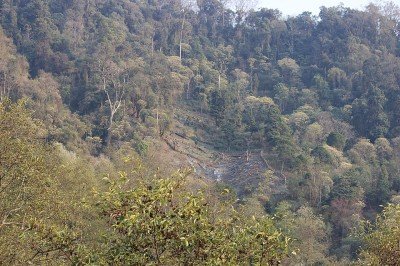 @@General Overview: Likhimro Falls is one of the most magnificent natural spectacles in the eastern region of Nagaland. Tucked away in a lush, verdant valley, the waterfall is fed by the pristine waters of the Likhimro River, which flows down from the high mountain ranges. The falls are characterized by a multi-tiered drop, with the main cascade plummeting into a deep, turquoise pool at the bottom. The surrounding area is a dense subtropical forest, home to a variety of orchids, ferns, and exotic wildlife. The roar of the water can be heard from a distance, creating an atmosphere of raw, untamed power. Historically, the area was difficult to access, which has helped preserve its pristine condition. Today, it is a popular spot for picnickers and nature lovers who are willing to make the journey from Tuensang. The site is also significant due to the nearby Likhimro Hydroelectric Project, which is one of the key power sources for the region. The mist generated by the falls keeps the surrounding air cool and refreshing, even during the peak of summer. Visiting Likhimro Falls offers a perfect escape from the dust and noise of the town, providing a meditative environment where one can truly connect with nature. The trek down to the base of the falls involves navigating through a series of stone steps and forest trails, adding an element of adventure to the visit. It is a place of immense beauty that showcases the ecological richness of the Tuensang district.
Information
-
Why Famous:
Mt.
Saramati: Tuensang is famous as the base for trekking to Mt. Saramati, the highest peak in Nagaland at 3,841 meters. It is a major destination for mountaineers and adventure seekers in the region.
Living Stones: The district i...Mt.
Saramati: Tuensang is famous as the base for trekking to Mt. Saramati, the highest peak in Nagaland at 3,841 meters. It is a major destination for mountaineers and adventure seekers in the region.
Living Stones: The district is famous for the "Living Stones" of Longtrok, ancient monoliths that are believed to have magical powers. These stones are central to the local folklore and represent the ancient origins of the tribes.
: -
Architecture:
Tribal Fortifications: Traditionally, villages in Tuensang were built on high, defensible ridges with elaborate fortifications and gates. The houses are constructed using heavy timber beams, bamboo, and thatched roofs, designed to last in the harsh mountain environment. Th...Tribal Fortifications: Traditionally, villages in Tuensang were built on high, defensible ridges with elaborate fortifications and gates. The houses are constructed using heavy timber beams, bamboo, and thatched roofs, designed to last in the harsh mountain environment. The "Morung" or bachelor's dormitory remains a significant architectural feature, often decorated with trophies and carvings. These buildings serve as centers for learning and community bonding. A typical traditional house of a tribal leader can be as large as 45x25 feet.
Contemporary Mix: Modern Tuensang town features a mix of traditional influences and modern construction. Government offices and residential buildings use concrete and corrugated iron, built into the steep slopes using elaborate terracing. The town's churches are prominent structures, reflecting the deep-rooted Christian faith of the community. These modern buildings are designed with wide windows to capture the mountain views. The central town hall is a large structure with dimensions of approximately 110x70 feet, used for major cultural and administrative events.
: -
How To Reach:
By Air: The nearest airport is in Dimapur (235 KMS). From Dimapur, travelers can take a long-distance taxi or a state transport bus to Tuensang. The journey is tiring and can take up to 10-12 hours, so many people choose to break the trip in Mokokchung or Wokha.By Air: The nearest airport is in Dimapur (235 KMS). From Dimapur, travelers can take a long-distance taxi or a state transport bus to Tuensang. The journey is tiring and can take up to 10-12 hours, so many people choose to break the trip in Mokokchung or Wokha.
By Train: Dimapur Railway Station is the closest rail connection. Shared taxis (Sumos) are available from the station to Tuensang, but the journey is long. Another option is Mariani Junction in Assam, from where you can enter Nagaland through Mokokchung to reach Tuensang.
By Road: Tuensang is connected by road to Mokokchung (115 KMS) and Kohima (235 KMS). The National Highway is the main route, but the mountain roads can be rough and slow. Regular shared taxis and occasional state transport buses are the primary modes of long-distance road travel.
Local Transport: Within the town, walking is the most practical way to get around the market and administrative areas. For visiting the various tribal villages, shared taxis are the main option. For a more flexible itinerary, you can hire a dedicated taxi for the day, which is recommended for remote spots.
: -
Weather and Best Time to Visit:
Post-Monsoon Season: October to December is the best time for clear skies and stunning mountain views. This is the ideal period for trekking to Mt. Saramati and visiting the remote tribal villages. The weather is cool and pleasant, making long days of exploration very com...Post-Monsoon Season: October to December is the best time for clear skies and stunning mountain views. This is the ideal period for trekking to Mt. Saramati and visiting the remote tribal villages. The weather is cool and pleasant, making long days of exploration very comfortable.
Spring Season: March to May is also a good time to visit, with moderate temperatures and blooming wild flowers. The greenery is lush, and the tribal festivals in April offer a great cultural experience. It is a good time for birdwatching and exploring the local forests.
Time of Day: Early mornings are essential for catching the best views of the high peaks and the mist-filled valleys. The afternoon is a good time to visit the local markets and interact with the diverse tribal groups. Nights are cold, and it is best to stay indoors and enjoy the local hospitality.
: -
Near Tourist Places:
1. Mokokchung (115 KMS), 2. Mount Saramati (70 KMS), 3. Shamator (60 KMS), 4. Noklak (55 KMS), 5. Longtrok Village (20 KMS), 6. Changsangmonko (15 KMS), 7. Kiphire (110 KMS), 8. Zunheboto (105 KMS), 9. Wokha (140 KMS), 10. Kohima (235 KMS).
Tourism Tips
-
Health & Safety: Tuensang is a very remote region, so it is vital to carry a comprehensive first-aid kit and all regular medicines. Access to specialized medical care is limited. Always inform your host or the local authorities before embarking on long treks, especially ne...Health & Safety: Tuensang is a very remote region, so it is vital to carry a comprehensive first-aid kit and all regular medicines. Access to specialized medical care is limited. Always inform your host or the local authorities before embarking on long treks, especially near the border areas.
Packing Advice: Heavy woolens are mandatory for the winters, and a good quality raincoat is needed for the rest of the year. Sturdy, well-broken-in hiking boots are essential for the rugged mountain trails. Carry a high-capacity power bank and a reliable flashlight as electricity can be intermittent.
Accommodation: There are a few guest houses and a government circuit house in Tuensang town. For a more authentic experience, try to arrange a stay in a village homestay. It is highly recommended to book your accommodation well in advance, especially during the festival months.
Cultural Respect: Show respect for the diverse tribal traditions and ask for permission before taking photos of people or their property. Dress modestly and be mindful of local customs, especially in the more traditional villages. A friendly and respectful attitude will open many doors and make your trip truly special.
:
Reviews
FAQs
Tuensang Itineray And Cost:-
Other Places In Nagaland :-
Other States In India :-
Information about New and Updated Locations() of Nagaland Has Been Added :-
Card subtitle
Note:-
Information provided here in good Faith and for reference only.
Near Places

Dimapur
Some quick example text to build on the card title and make up the bulk of the card's content.
Go somewhere
Dzulekie
Some quick example text to build on the card title and make up the bulk of the card's content.
Go somewhere
Khonoma
Some quick example text to build on the card title and make up the bulk of the card's content.
Go somewhere
Kigwema
Some quick example text to build on the card title and make up the bulk of the card's content.
Go somewhere
Kiphire
Some quick example text to build on the card title and make up the bulk of the card's content.
Go somewhere
Kohima
Some quick example text to build on the card title and make up the bulk of the card's content.
Go somewhere
Longleng
Some quick example text to build on the card title and make up the bulk of the card's content.
Go somewhere
Meluri
Some quick example text to build on the card title and make up the bulk of the card's content.
Go somewhere
Mokokchung
Some quick example text to build on the card title and make up the bulk of the card's content.
Go somewhere
Mon
Some quick example text to build on the card title and make up the bulk of the card's content.
Go somewhere
Mopungchuket
Some quick example text to build on the card title and make up the bulk of the card's content.
Go somewhere
Nagaland Heritage Village
Some quick example text to build on the card title and make up the bulk of the card's content.
Go somewhere
Niuland
Some quick example text to build on the card title and make up the bulk of the card's content.
Go somewhere
Noklak
Some quick example text to build on the card title and make up the bulk of the card's content.
Go somewhere
Peren
Some quick example text to build on the card title and make up the bulk of the card's content.
Go somewhere
Zunheboto
Some quick example text to build on the card title and make up the bulk of the card's content.
Go somewherein Other Cities